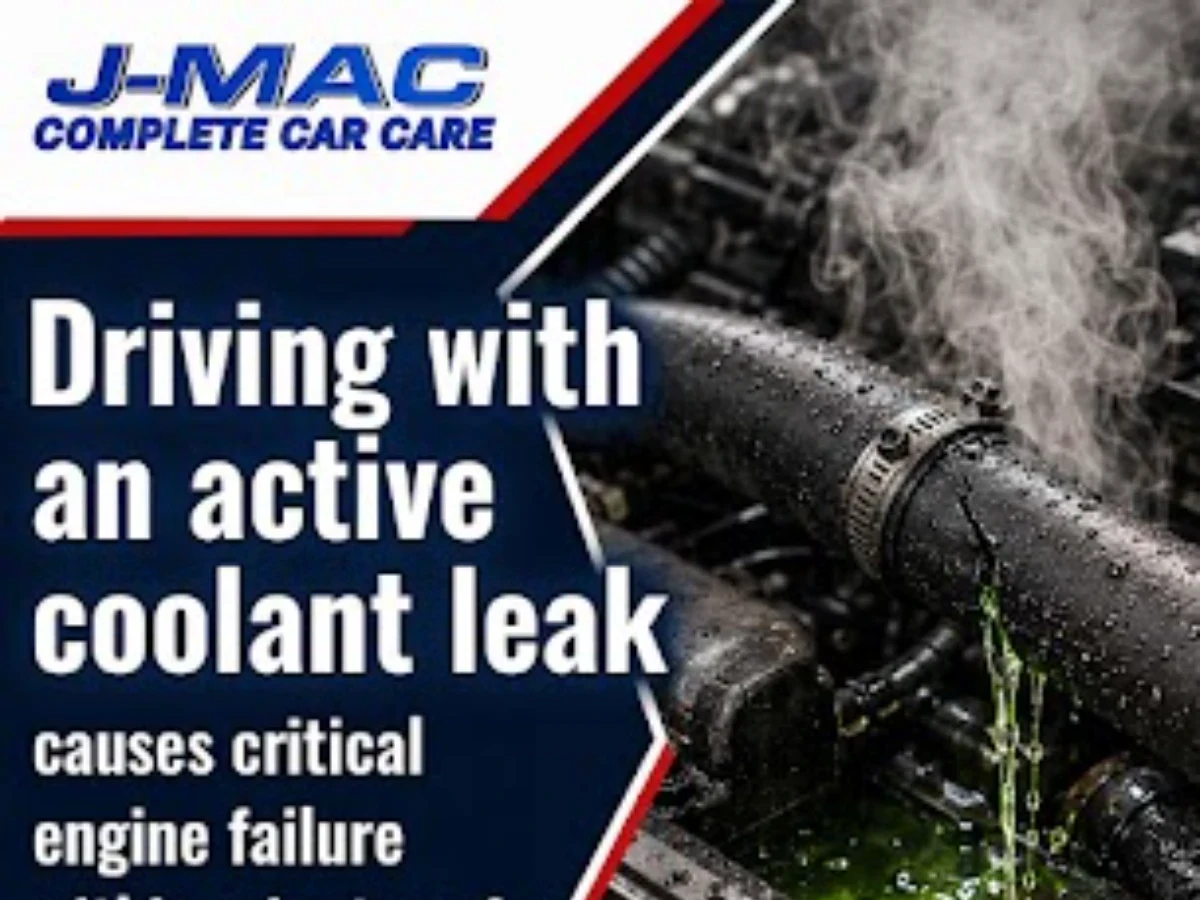
SALT LAKE CITY, UTAH, NOVEMBER 8, 2026 — Coolant puddles, rising engine temperatures, and unusual heater behavior can signal cooling-system problems and may indicate a need for car radiator repair. J-Mac Complete Car Care highlights these warning signs, while the National Highway Traffic Safety Administration (NHTSA) recommends checking coolant levels and inspecting the cooling system for leaks.

Radiator Leak Can Become a Larger Cooling-System Issue
A radiator is part of the system responsible for removing heat from the engine. When coolant escapes, the system may lose its ability to regulate engine temperature effectively.
The severity of a leak can vary. A small drip may not immediately cause the temperature gauge to rise, while a more active leak can cause coolant levels to fall quickly. Once the engine begins overheating, continued driving can increase the risk of more extensive mechanical damage.
Drivers may notice several warning signs, including:
Coolant spots or puddles beneath the vehicle
A temperature gauge rising above its normal range
Steam or a sweet coolant odor near the engine
A coolant level that repeatedly drops
Cabin heat that becomes weak or unexpectedly cool
What Drivers Should Do When a Leak Appears
The appropriate response depends on the severity of the symptoms. A vehicle showing an overheating warning, producing steam, or reaching the red zone on the temperature gauge should not continue driving. The engine should be allowed to cool safely, and professional assistance may be appropriate.
For less obvious symptoms, an inspection can determine whether the radiator, hose, water pump, thermostat, or another cooling-system component is responsible.
Heater Performance Can Reveal Cooling-System Problems
The engine cooling system also supplies heat to the cabin through the heater core. As a result, a cooling-system problem can sometimes appear as a heating-system complaint.
Low coolant, for example, can reduce the amount of hot coolant reaching the heater core. A driver who notices weak cabin heat along with a falling coolant level or rising temperature gauge may have more than an isolated heating problem.
This is where auto heating and cooling repair can overlap with radiator diagnosis. The air-conditioning system, however, operates through a separate refrigerant circuit, so an AC complaint does not automatically indicate a radiator problem.
What a Cooling-System Inspection Can Identify
A proper inspection looks beyond the visible puddle or temperature reading. Technicians can pressure-test the cooling system and inspect components that may contribute to coolant loss or overheating.
Depending on the vehicle and symptoms, an inspection may involve:
Radiator condition and potential leak points
Coolant hoses and connections
Thermostat operation
Water pump condition
Cooling fan operation
Coolant level and condition
The purpose is to identify the source of the problem before determining which repair is appropriate.
When Radiator and AC Concerns Appear Together
The radiator and AC condenser are often located near each other and depend on airflow, but they serve different functions. If a vehicle overheats while the AC performs poorly, both systems may need separate evaluation to identify the cause before repairs are recommended.
What Drivers Should Know Before Choosing a Repair Facility
A car radiator repair shop in Salt Lake City may encounter various cooling-system issues, including leaking hoses, damaged radiators, and malfunctioning thermostats. Because symptoms can overlap, a thorough inspection and diagnostic testing can help identify the source of coolant loss or overheating before determining the appropriate repair.
A Focus on Diagnosis Before Repair
"Drivers may notice a coolant smell or a rising temperature gauge without knowing which component is responsible," said Greg McKenna, Owner and Technical Director at J-Mac Complete Car Care. "The inspection helps identify where the cooling-system problem is coming from so the appropriate repair can be considered."
Recognizing the Warning Signs Early
A coolant leak does not always begin with an obvious overheating event. Drivers may first notice a small puddle, a recurring need to add coolant, an unusual smell, or a change in cabin heat.
NHTSA's guidance reinforces the importance of checking coolant levels and having cooling systems inspected for leaks.
For Salt Lake City drivers, recognizing these signs can provide an opportunity to have a cooling-system concern evaluated before it develops into a more serious overheating problem.

About J-Mac Complete Car Care
J-Mac Complete Car Care is a third-generation, family-owned auto repair center in Salt Lake City, serving drivers since 1972. Founded by Jerry McKenna, the shop provides bumper-to-bumper service for all makes and models, including cooling and climate control repairs. Customers receive complimentary digital inspections and a 2-year/24,000-mile warranty.
Source Link: http://www.jmaccarcare.com/can-you-drive-with-a-leaking-radiator-what-to-do-in-slc